Tesla Moves Optimus Robots to High-Volume Production Line in Fremont
The company has declared its humanoid robots production-ready, utilizing a dedicated manufacturing line in California to begin a phased rollout of tens of thousands of units weekly.
By Mariana Delgado ·
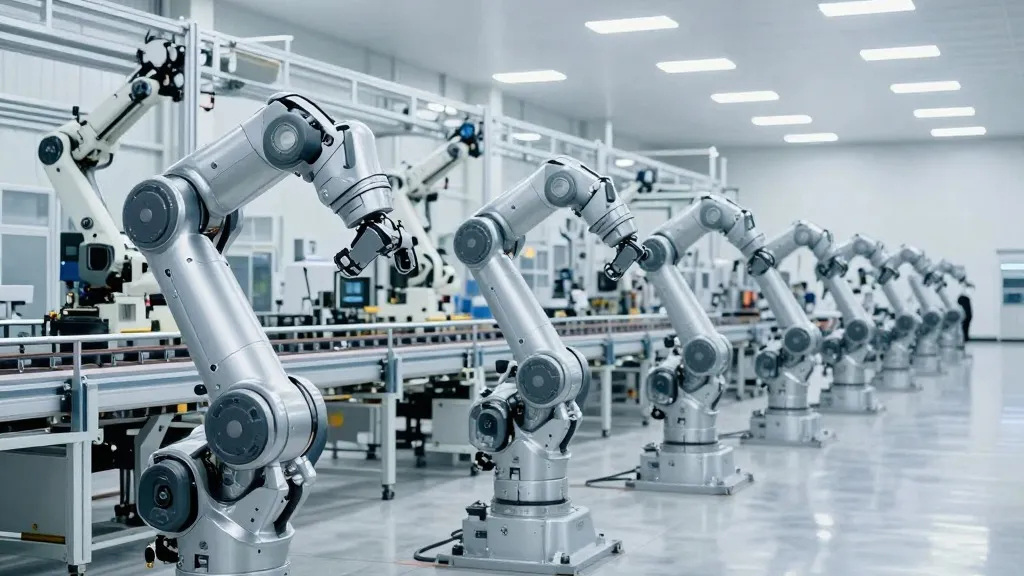
Tesla has officially transitioned the production of its Optimus humanoid robots to a high-volume manufacturing line within its Fremont factory, marking a pivotal shift from prototype development to commercial readiness. The company announced that the units rolling off this specific assembly line are the first to meet the strict quality standards required for a finished product, signaling that the engineering challenges of the past few years have been largely resolved. This move represents a significant milestone in Tesla’s broader strategy to expand beyond the automotive sector and into the labor-intensive industrial market.
The physical infrastructure for this new venture is already in place. The production line occupies the same floor space that previously housed the assembly of the Model S and Model X vehicles. Tesla cleared out the legacy car manufacturing equipment in just 46 days this spring, a rapid transition that paved the way for a robot-focused facility capable of handling one million units annually. According to the latest shareholder letter, the manufacturing process has been validated as suitable for a commercial product, a claim that underscores the company’s confidence in its current operational capabilities.
Elon Musk outlined the production ramp-up strategy during Wednesday’s earnings call, describing the growth trajectory as a classic S-curve. He noted that the initial phase will feature a shallow slope before output accelerates significantly. Most of the necessary equipment for this capacity is already installed in Fremont, and the company aims to increase weekly output toward 20,000 robots as the line reaches full stride. This aggressive target highlights Tesla’s intent to scale quickly rather than gradually introducing the technology to the market.
A central challenge in scaling humanoid robots is the acquisition of training data. Unlike Tesla’s cars, which benefit from a massive fleet sending back real-world driving information, Optimus lacks a comparable user base. To address this gap, Tesla has developed an "Optimus Academy," a concept where 10,000 to 20,000 robots will engage in a variety of tasks to generate the data needed to refine the artificial intelligence models. Every robot produced on the Fremont line will serve as a data point, feeding its experiences back into the system to improve subsequent iterations.
The company is also preparing to upgrade the hardware capabilities of the robots. Tesla plans to integrate its next-generation AI5 chip into Optimus units next year, which should enhance processing power and learning efficiency. Musk indicated that a new video demonstration is expected within one or two months, showcasing the robot performing tasks driven by artificial intelligence rather than pre-programmed sequences. This update is intended to distinguish Tesla’s approach from competitors who often rely on scripted routines that may not translate effectively to unstructured real-world environments.
The supply chain ecosystem is aligning with Tesla’s production goals. In September, the company certified Tuopu, Joyson, and Sanhua as mass production partners for critical Optimus components. This validation of third-party suppliers is crucial for meeting the volume targets set for the Fremont facility. The partnerships ensure that a steady flow of high-quality parts is available to support the anticipated surge in manufacturing output.
While Fremont serves as the immediate production hub, a much larger dedicated factory is under construction at Giga Texas. Recent drone footage has revealed that the steel frame of this new facility is nearing completion. Musk has set an ambitious long-term target for this site, aiming to produce 10 million robots per year. This expansion suggests that Tesla views the humanoid robot as a long-term growth engine that will eventually dwarf its automotive output.
Cost efficiency remains a key focus of the engineering team. Executives stated that Optimus production costs are trending toward the projected manufacturing cost of the Cybercab, indicating that the robot is being designed for volume from the outset. However, the dexterous hands of the robot remain the most complex component. This area has been a point of emphasis for the engineering team, including during recent public events, as it is critical for the robot’s ability to perform delicate and varied tasks in industrial settings.
Source: Teslarati