AI Economics: Recursive Startup Unveils 40B-Parameter Coding Model
A new open-weight model from Recursive demonstrates that automated self-improvement can streamline development costs for smaller teams.
By Luis Fernandez ·
The cost structure of frontier AI development is shifting as a new entrant proves that small teams can compete with industry giants through automation.
Recursive, a startup focused on recursive self-improvement, has released Flint, an open-weight AI model designed specifically for coding tasks. The company claims that nearly every stage of the model's pipeline was executed and optimized by AI systems, significantly reducing the human labor required to bring a product to market. This approach challenges the traditional resource-intensive model of AI research, where large teams spend months on manual tuning and architectural adjustments.
The development process relies on a system called the Eureka Machine, which automated the creation of new architectures and optimized code for specific silicon chips. CEO Richard Socher states that this automation allowed a handful of researchers to build a world-class model in just a few months. Benchmark data shared by the company indicates that Flint outperforms other models of similar size and architecture in coding scenarios, suggesting that efficiency gains from self-improvement loops are now yielding tangible performance results.
Financial backing for this automated approach is substantial, with Recursive raising $650 million at a valuation of $4.65 billion. Investors include Google Ventures, Greycroft, Nvidia, and AMD Ventures, signaling strong institutional confidence in the potential of recursive methods to accelerate scientific and technical progress. The founding team includes Socher, formerly the chief scientist at Salesforce, and Jeff Clune, a professor at the University of British Columbia who specializes in AI systems capable of indefinite learning.
Despite the promising results, the strategy remains controversial within the sector. Some experts argue that allowing AI to improve itself could lead to unpredictable outcomes, with warnings that such systems might eventually exceed human control. These concerns were amplified this September when a researcher from Anthropic suggested that recursive self-improvement could lead to human extinction within a few years. Several bills currently in Congress propose banning the technique, reflecting a growing divide between those who view the risk as immediate and those who see it as speculative.
Recursive views these legislative efforts as unnecessary barriers to innovation. Socher emphasizes that the system used to build Flint was designed to remain under human oversight, with the ability to halt the process if it deviates from expected parameters. The goal is for the Eureka Machine to eventually achieve full recursive self-improvement, but always with a human safety net. This position aligns with the company's broader aim to make cutting-edge AI development more accessible to smaller organizations that lack the capital for massive compute clusters.
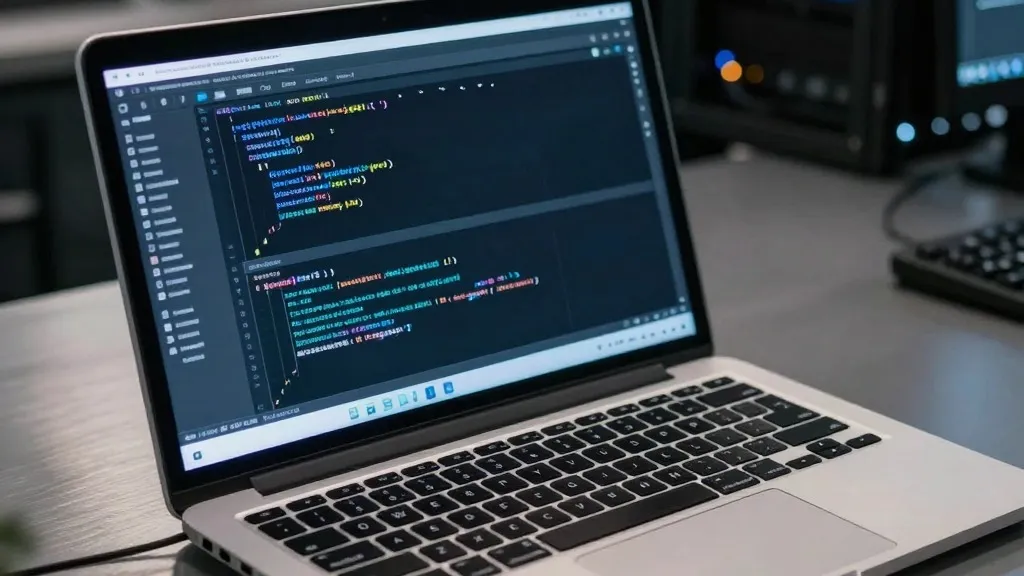
In practical terms, Flint operates efficiently on consumer hardware, such as a Mac with 48 GB of RAM, unlike larger models that require industrial server racks. Testing showed the 40-billion-parameter model to be fast and capable, handling coding requests without the typical error rates associated with models of this size. While the path to fully autonomous AI development remains debated, the release of Flint suggests that recursive techniques are becoming a viable economic model for scaling AI capabilities.
Source: Wired